0 items
view cart

Organic CBD oil, cold-pressed, high concentration: what regulations really allow
Temps de lecture
⌛
5 min
Contents :
CBD oils are part of the CBD product range, for which demand is growing rapidly. Several manufacturers and retailers stand out by offering organic, cold-pressed, 100% natural oils...But these labels are governed by strict rules that are not always respected.
In this article, we will look at who sets the rules for the French CBD oil market, what these rules are, and we will give you some tips on how to easily distinguish between what is true and what is false.
The French CBD market: who sets the rules?
When it comes to CBD oil, as with any other hemp-based product, the legal rules are defined by the French government and the European Union, notably through decrees, European regulations, and court decisions. But in practice, it is mainly the regulatory authorities that interpret and enforce these rules on the ground.
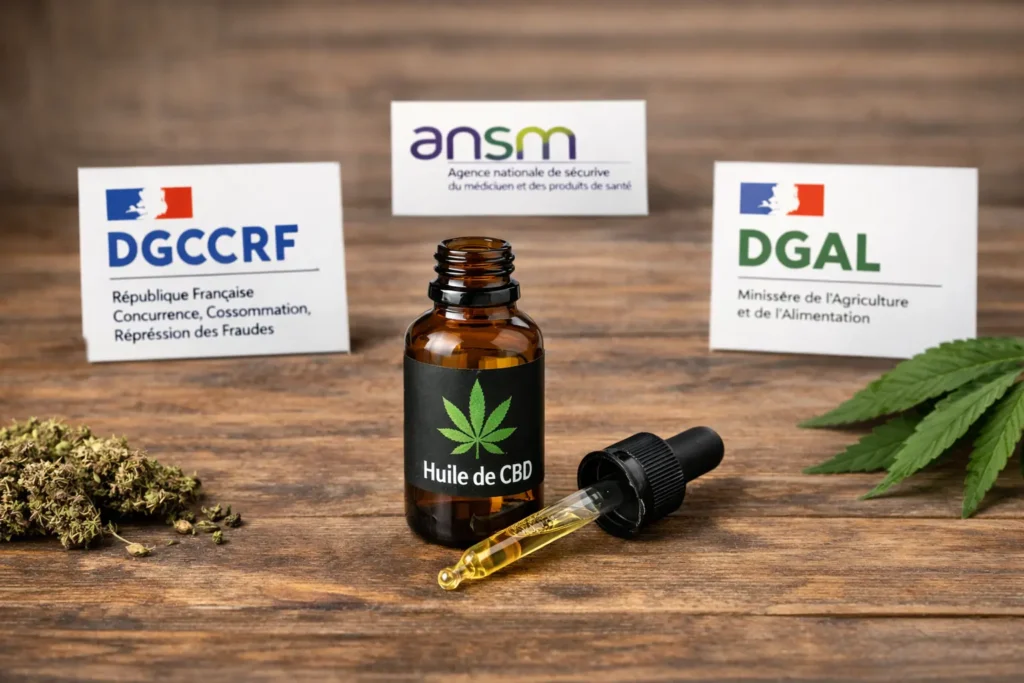
Among the organizations most active in the CBD are:
- The Directorate-General for Competition, Consumer Affairs, and Fraud Control (DGCCRF);
It is responsible for monitoring farmers, suppliers, and distributors in order to ensure product traceability, proper labeling, and the absence of therapeutic claims. - The Directorate General for Food (DGAL):
This organization deals with food safety issues, particularly those concerning products intended for consumption. - The French National Agency for Medicines and Health Products Safety (ANSM):
This agency only intervenes in specific cases. It is responsible for conducting investigations into health products, medicines, and dietary supplements in order to rule on the dangerousness of certain compounds, as was the case for certain CBD derivatives.
This explains why CBD regulations are so changeable: they are largely based on administrative interpretations, investigations, and subsequent health recommendations, rather than on strict, fixed texts.
Maximum permitted levels of CBD oils: unclear boundaries
To date, in France, no legislation explicitly sets a limit on the concentration of CBD in oils. However, the recommendations on the permitted daily dose, applied by the DGCCRF and the DGAL, are likely to restrict the maximum percentage in oils.
These organizations rely on internal recommendations to limit the recommended daily dose to approximately 50 mg of CBD per day, mainly to avoid the risk of drug interactions.
For example, one drop of oil containing 30% CBD contains approximately 15 mg of CBD. Three drops of this oil would be close to the recommended limit.
In this context, highly concentrated oils are not illegal per se. Nevertheless, a consensus has formed among suppliers, most of whom no longer produce oils exceeding 30% in order to avoid any embarrassment in the event of an inspection by the authorities.
Organic CBD oils: a designation that is difficult to obtain
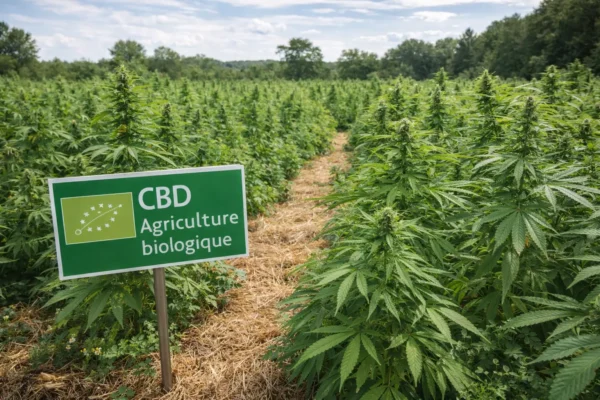
The organic rules for CBD oils are the same as for all other food products: they are very strict and regulated at the European level. According to the Department of Economic Affairs: "for processed products, at least 95% of the ingredients must come from organic farming."
In addition, CBD oils are most often produced by macerating hemp in carrier oil. This technique allows for certification, but its yield is rather low and the concentrations obtained rarely exceed 4 or 5%, which explains why these oils are generally much more expensive.
Conversely, highly concentrated oils (20% or 30%) are generally obtained through more complex extraction processes. Although they may be composed of a blend of organic ingredients, they rarely meet the criteria for official organic certification.
Cold extraction: an often misleading concept
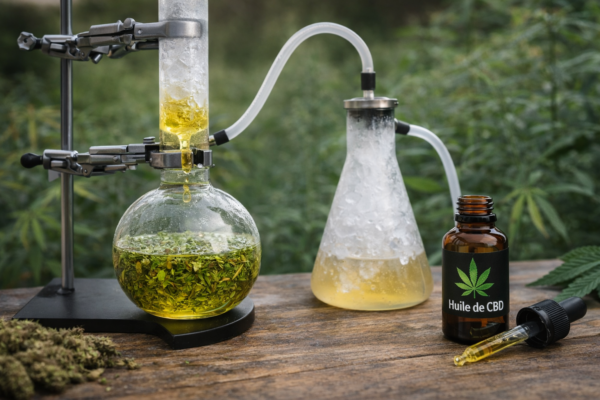
The term "cold extraction" is widely promoted in the CBD market. In the world of vegetable oils and olive oil, this designation is a true marker of quality, as it refers to processes that preserve heat-sensitive compounds.
In the CBD industry, many consumers naturally make this connection. However, unlike edible oils, the term "cold extraction" is not strictly regulated for CBD oils, which can lead to confusion.
In practice, two methods best correspond to the idea of gentle extraction without degrading the active compounds:
- Supercritical CO₂ extraction, such as that used in our CBD shop, is carried out at a controlled temperature and without chemical solvents. This method allows cannabinoids to be extracted while preserving most of the terpenes and flavonoids.
- The maceration of hemp in a carrier oil, without the application of heat. This traditional method generally produces oils with low concentrations (around 5%), but very similar in spirit to cold-pressed edible oils.
Conversely, some oils labeled as "cold-pressed" are actually cold-pressed carrier oils to which CBD extract obtained by another process has been added. This practice is perfectly legal, but it does not always meet the requirements of naturalness and minimal processing that consumers seek when they talk about cold extraction.
In summary, for a CBD oil that is truly consistent with the idea of gentle extraction, it is essential to consider not only the carrier oil, but also the CBD extraction process itself.
How can you be sure you are buying high-quality CBD oil at the best price?
Here are our tips to help you choose a high-quality CBD oil, whether it's organic or cold-pressed. When you look at a product description, check these points:
- Check the extraction process used for theCBD and the carrier oil. If an oil is cold-pressed, the CBD must be extracted using supercritical CO₂ at low temperatures or through maceration.
- Look at the concentration and size of the bottle: you may find an oil that is 20% cheaper than others, but if the bottle is smaller, the price is often actually the same.
- Be wary of products labeled "organic" with more than 5% organic content. It is very difficult to produce a certified organic extract with a concentration of 10% or 20%. Look for clear certification, otherwise it may just be a marketing ploy.
- Ensure traceability and the availability of laboratory analyses.
- Avoid oils that make explicit therapeutic claims.
In general, a high-quality oil is above all an oil that is transparent about its manufacturing process and composition, rather than an oil that makes excessive promises.