0 items
view cart

Rosin: a new 100% natural concentrate
Temps de lecture
⌛
4 min
Contents :
Have you ever heard of Rosin? It's an extraction technique that gives its name to the product it creates, a bit like ice-o-Lator.
This famous product is a concentrate of cannabinoids, terpenes and flavonoids of a new kind: totally natural, extracted without any solvents.
Want to learn more? Here's our presentation!
What is Rosin
This is a concentrate harvested by pressing. The process uses heat combined with mechanical pressure to extract the elements of interest from buds, hash or any plant material.
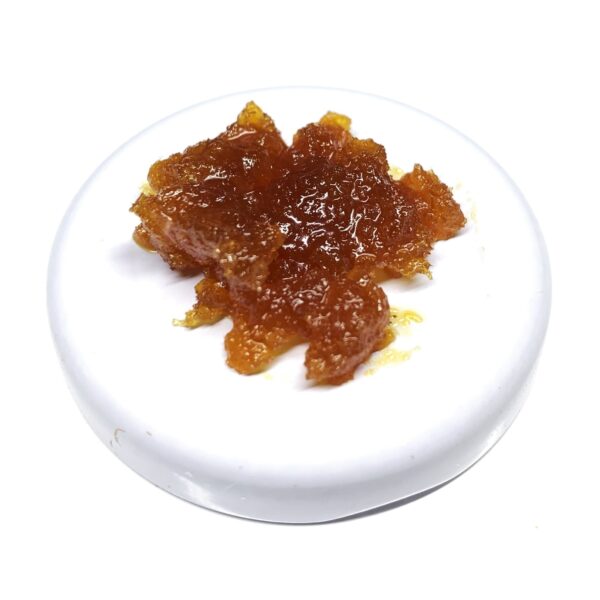
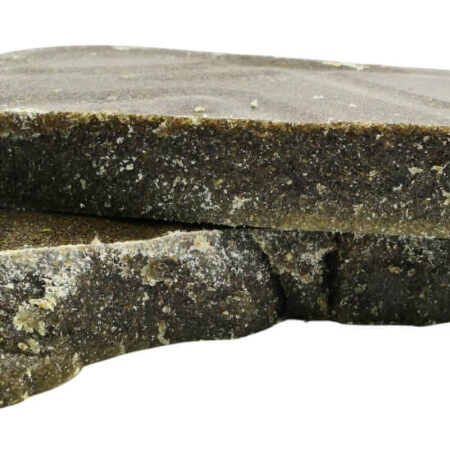
Depending on the raw material used, the result is a paste-like, oil-like or honey-like concentrate. The taste and smell remain unchanged, and it too is a concentrate of the base product.
How is Rosin extracted?
The technique is very simple and versatile. You can create rosin from bud, any resin or even pruning waste, and it's so simple that you can reproduce it at home with very little equipment.
To reproduce it, simply take your CBD head or resin and press it at a temperature of between 160ºC and 200°C. Many people use a hair straightener for this purpose. Simply place your raw material in a sheet of greaseproof paper, place it between the straightener's tongs and press hard for 5 to 10 minutes.
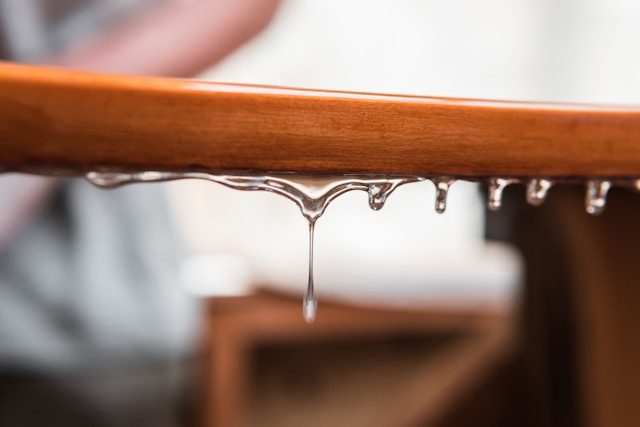
Under the action of heat combined with pressure, a translucent liquid resembling oil or resin escapes from your flower or hash: these are the cannabinoids. This is how Rosin is created.
It can be made like this in DIY mode, but it is also made by industrialists for sale in the shops. Here, machines press and harvest the Rosin. By playing with pressure, temperature and the base product, we obtain different types of Rosin with different textures and degrees of concentration.
The pros and cons of Rosin
The technique has many advantages:
- It can be used indifferently on flowers, cutting residues, hash, pollen and ice-o-lator.
- It's very easy to use and you can do it yourself.
- But the biggest advantage is that the technique uses no solvents to extract the result. If the base product is of good quality, there's no chance of chemical residues finding their way into the result.
On the downside, however, there aren't really any. Even pressed material can be reused. Once the Rosin has been extracted, some use the flowers or hash left over for vaporization, cooking or infusion, even though most of the active ingredients have been removed.
The Rosin story
As with the creation of Moonrock, the development of ice-o-Lator and CRD, the history of this extraction technique is a little hazy.
As far as we know, it's a fairly recent development, even more recent than the cryogenic drying technique.
In the 2000s, a certain Compashon shared a tutorial on ICMag, a famous American forum.
At first, it was something of an insider secret, but the technique gained momentum when it was presented on a wider scale. In 2015, a certain Phil "Soilgrown" Salazar, a dispensary manager in the United States, carried out several trials, which he documented with photos and shared on the web.
In the years that followed, the technique attracted the interest of more and more specialists, right up to the retail giants. Today, Rosin can be found in most CBD stores.
Rosin or Live Rosin?
Rosin is extracted from commercially available buds, after drying and curring. Live rosin is extracted from freshly cut, undried flowers.
The temperature used to extract Live Rosin is lower, not exceeding 90°C.
The difference between the two is significant. Live Rosin generally produces a more pasty product, more like wax than oil.
The final product is also tastier, as some terpenes such as monoterpenes normally lost during drying are present in Live Rosin. Above all, the product is even more concentrated than ordinary Rosin.
For a more abundant extraction with even more terpenes, fresh flowers can be frozen directly after picking. They are then pressed as they are with an 85°C press. The result is even better!
How to eat Rosin
As a concentrate, Rosin can be used in the same way as most waxes. It can be used in cooking, or as an herbal tea. And by infusing your Rosin in oil at 105-115ºC for 30-60 minutes, you can create your own CBD oil, or any derivative.
But the method that is generally recommended is vaporization, as it allows you to absorb over 90% of the compounds present, while enjoying the full taste of your Rosin.
Now that you're familiar with this new 100% natural flavor concentrate, all you have to do is try it out and tell us what you think!
And as always, feel free to explore our blog to continue learning new things about the exciting world of CBD!