0 items
view cart

CBT: Discover the possible cure for THC
Temps de lecture
⌛
5 min
Contents :
We continue our discovery of the many and varied cannabinoids with CBT, also known as cannabitriol.
Discovered in the 1980s and isolated in 2014, it is still largely unknown, but it has some particularly interesting characteristics, including a potentially THC-inhibiting effect.
What is Cannabitriol (CBT)?
CBT is one of the 100 or 200 minor cannabinoids synthesized by hemp and cannabis plants, but unlike thc or CBD, it is not available in large quantities and is only represented in certain specific varieties.
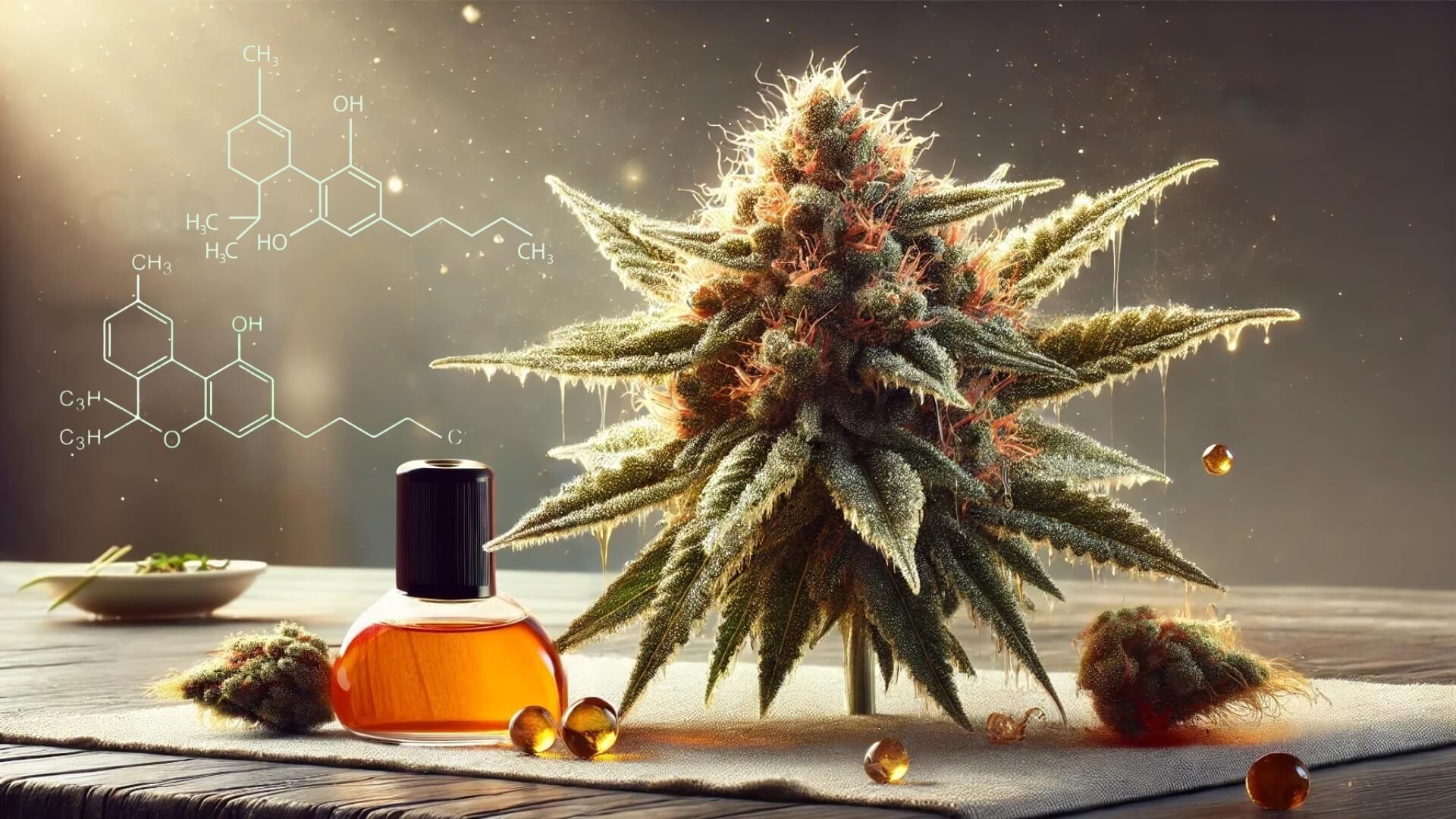
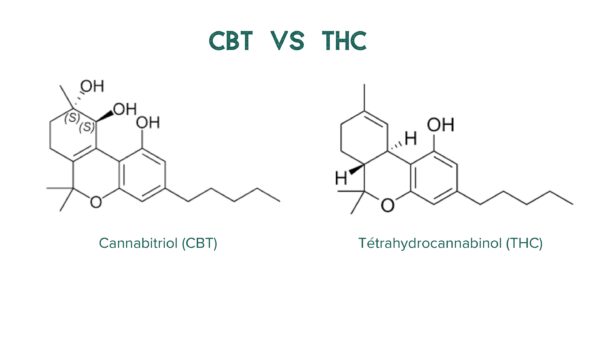
What's more, unlike many "CB"-type molecules, as opposed to "TH"-type molecules, CBT 's molecular structure is closer to THC than to CBD. This is simply because cannabitriol is synthesized by the THCA molecule, the acid form of THC. Nevertheless, a few differences remain. CBT has more hydroxyl groups. These groups, made up of an extra oxygen and hydrogen atom (-OH)-, increase its polarity.
We've said that CBD can only be found in certain varieties of hemp, but that's not the only place it can be found: it can also be synthesized by the oxidation of THC by riboflavin (vitamin B2) under white light. A CBT molecule obtained in this way is therefore a metabolite, just like 10 oh hhc, which is the result of oxidation of HHC after it has been processed by liver enzymes.
Is CBT a THC inhibitor?
Despite the fact that CBT has a molecular structure close to THC and is synthesized by THCa, CBT could hypothetically be a solution for cannabis consumers. Not as a substitute or regulator like CBD.
But it could allow users to consume cannabis without experiencing the negative effects associated with THC. Many articles about CBT on the internet say that a 2007 study found that CBT could cancel out some of the effects of THC, but that's not quite the case.
In fact, as we've said, the difference between CBT and THC is the addition of OH groups. But these groups make a big difference: they make this compound soluble in water, unlike THC, which is only soluble in fat. Above all, they make the molecule polar.
This polarity also greatly changes the way the body absorbs and distributes the molecule, as polar molecules, like CBT, are more rapidly absorbed and rejected by the body. What's more, this polarity also prevents the molecule from crossing the blood-brain barrier (BBB) that protects the brain, unlike THC.
The idea would be to design a complementary product that consumers could absorb. This product would act as a catalytic antibody, capable of oxidizing THC and deactivating it during consumption. This would make it possible to consume cannabis and benefit from its medicinal properties, while protecting the consumer from its harmful effects.
But, as you can see, this technology is still a long way from being perfected, and we certainly won't be seeing this solution for a long time yet.
The effects of CBT
Like so many cannabinoids with low concentrations in cannabis, little is known about CBT. What's more, the few researchers who have looked into CBT don't know exactly how it works.
It is unlikely to be psychoactive or psychotropic. Some have suggested that it may play a major role in the entourage effect, i.e. increasing the potency of other cannabinoids consumed at the same time.
Like other cannabinoids, CBT could also interact with the cannabinoid system like CBD, potentially affecting :
- Hunger
- The sensation of pain
- The body's response to inflammation
- Libido
- Nicotine addiction trends
- ...
However, there is no serious scientific data on this subject.
Promising medical applications
Much more recent studies, published in 2020 and 2021, have investigated the properties of CBT in cancer treatment, and more specifically in breast cancer treatment.
The first publication is not a discovery, as we had already mentioned in this article about CBDP. This study set out to analyze the potential of various cannabinabinoids to act as aromatase inhibitors. This potential proved positive. Aromatase is an enzyme that enables the biosynthesis of sex hormones, and since breast cancer is hormone-dependent, its development is impacted by these hormones, which stimulate cancer cells. By inhibiting aromatase, CBT therefore has a definite anti-cancer potential.
The second study is quite similar, and attempted to analyze the potential of cannabinoids as inhibitors of the estrogen receptor alpha (the female sex hormone). The results suggest that CBT, like other cannabinoids, may possess a superior inhibitory property to Tamoxifen, a drug commonly proposed for the treatment of breast cancer. In addition to this superior property, CBT also appears to have fewer side effects than Tamoxifen.
But it's important to remember that, while promising, these studies are still in their infancy, and as they say, much more research - including in vivo and in vitro studies - is needed before CBT can be validated as a potential breast cancer treatment.
In conclusion
CBT is another cannabinoid with a singular function. Thanks to the relatively easy conversion of THC into CBT, it could provide a satisfactory answer to the use of therapeutic marijuana without the deleterious effects we know about.
Moreover, with its potential benefits against hormone-dependent cancers such as breast cancer. Like other cannabinoids, CBT consumed in food preparations, oil or flower could also represent a major step forward in the field of oncology.
But as always with cannabinoids, these results are still a long way from being applicable, and if they are, it will be some time before they are. But rest assured that if such research is ever carried out, we'll be sure to keep you informed, so keep following our blog posts!